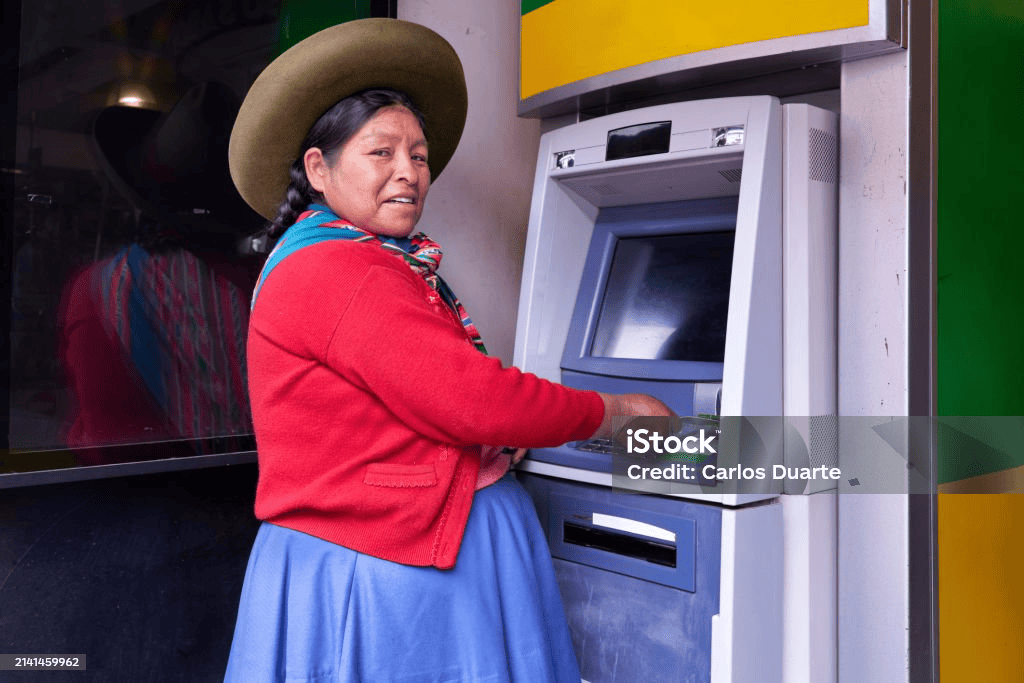
Peru’s payments landscape is not one where standardised approaches translate easily into consistent performance. Card penetration remains relatively low, and a significant portion of the population is still unbanked. The majority of population rely on a wide mix of payment methods, including digital wallets like Yape, Plin and others, bank transfers, as well as cash-based solutions like PagoEfectivo, and other local payment rails. This makes successful payments in Peru less about offering multiple methods and more about how intelligently they are orchestrated together.
A fast-growing digital market with diverse payment behaviour
Peru’s digital economy is expanding quickly. Nearly 80% of the population is now online, with mobile-first usage driving most of that growth. At the same time, digital wallets already account for around 26% of online transaction value and play an increasingly important role in everyday payments, reflecting the shift away from exclusive reliance on traditional card usage.
Speed, accessibility and familiarity matter greatly in everyday transactions. That’s why users prefer methods that feel simple and locally familiar, such as digital wallets, over traditional card-based payments.
At the same time, bank transfers and cash-based solutions still play a significant role, especially among users who prefer non-card methods, want greater control over how they pay online, or do not rely on traditional credit products. Cash-based methods such as PagoEfectivo remain relevant because they let users complete online purchases without using a credit card, helping bridge online commerce with familiar offline payment behaviour. As adoption grows, so does the complexity of managing different payment behaviours across user segments, devices and transaction types.
A multi-method ecosystem beyond cards
While cards are still present, they are not the dominant payment method in Peru. Alternative methods are widely used, shaped by access, trust and convenience. Digital wallets, account-to-account transfers and cash-based solutions all coexist, allowing users to choose different rails depending on the type of transaction.
The bottom line is that there is no single payment rail that can provide complete coverage. Users who rely on wallets may not use cards, while others prefer bank transfers or cash-based options for online transactions.
This diversity can, of course, generate wider coverage, but also introduce fragmentation in how payments are processed, settled and reconciled. To succeed, merchants need to play differently and move beyond simply supporting multiple methods, and instead better manage how those methods perform together.
This multi-method behaviour also has direct implications beyond the payment experience itself, particularly in treasury management, liquidity and settlement operations. Each payment method introduces different funding models, settlement cycles and reconciliation processes. Wallets may settle in near real-time, bank transfers can follow domestic clearing timelines, while cash-based methods often involve delayed confirmation and settlement after payment completion.
As a result, merchants must manage fragmented liquidity across multiple providers, balance prefunding requirements, and maintain visibility over funds that move at different speeds and through separate rails. Without a unified structure, this can lead to inefficiencies in cash flow management, increased operational overhead and reduced control over working capital.
Regulation and infrastructure shaping flows
Peru’s payment ecosystem operates within a structured regulatory environment and domestic infrastructure, where electronic money issuers, transfers and digital payment providers are overseen by institutions like the Banco Central de Reserva del Perú and the Superintendencia de Banca, Seguros y AFP.
This oversight helps formalize transaction flows across the market and has enabled the growth of wallets, account-to-account transfers and alternative payment methods, while maintaining traceability and compliance requirements across providers (BCRP; SBS).
At the same time, locally governed payment systems continue to evolve as digital adoption increases. Instant transfers, electronic money accounts and cash-based payment networks all operate within this environment, resulting in a payments landscape that is both structured and diverse. As oversight increases, consistency and traceability across these flows become critical for operators.
Fragmentation creates operational complexity
The reality is that the multi-method environment in Peru creates operational challenges for both local and international operators entering the market, especially to those in highly regulated industries where velocity and accuracy are critical, such as iGaming and betting, trading, e-commerce and the creator economy.
If a merchant needs to support multiple payment options at the same time, maintaining consistent performance across methods creates challenges, such as:
- Integrating multiple payment methods
- Managing different payment flows for wallets, transfers and cash
- Consolidating transactions across separate systems
- Dealing with settlement times that vary depending on the method
- Monitoring acceptance rates across payment types
- Maintaining consistent performance across user segments
At the same time, this fragmentation extends beyond the payment layer into treasury management, liquidity and settlement operations. Each payment method operates with different funding models, settlement cycles and reconciliation processes. Wallets may settle in near real-time, bank transfers follow domestic clearing timelines, while cash-based methods often introduce delayed confirmation and settlement after payment completion.
As a result, merchants are required to manage fragmented liquidity across multiple providers, balance prefunding requirements and maintain visibility over funds that move at different speeds through separate rails. Without a unified structure, this can create inefficiencies in cash flow management, increase operational overhead and reduce control over working capital.
In this context, fragmentation is not just a technical challenge, but an operational one, and increasingly a strategic differentiator for merchants that can manage it effectively.
Addressing this requires a unified view of transactions and funds. Without it, optimising acceptance rates, tracking performance, managing liquidity and maintaining reliable settlement becomes significantly more difficult.
Orchestrating payments, treasury and settlements in Peru
Operating in Peru requires more than simply enabling local payment methods. It requires the ability to manage how those methods perform, interact and scale over time, while also maintaining control over liquidity and settlement outcomes.
As payment preferences continue to evolve, maintaining consistency across flows becomes a key factor in both conversion and user retention. At the same time, ensuring predictability in settlement cycles and visibility over funds becomes equally critical from a treasury perspective.
This is where orchestration moves from a technical layer to a strategic capability. As a result, the challenge is less about access to payment methods and more about maintaining control and consistency across them.
This is where infrastructure-led approaches to orchestration become increasingly important. At OKTO PAYMENTS, this is reflected in how we design infrastructure for complex, multi-method environments, focusing not just on access to payment methods, but on how they perform and settle together in real-world conditions.
In markets like Peru, merchant success increasingly depends on the ability to orchestrate complexity across both payments and financial operations, rather than simplify it, and ultimately, to design for orchestration when it comes to payments infrastructure.